What Happens If a Neurosurgeon Makes a Mistake? What Patients Need to Know
If a neurosurgeon makes a mistake, the first priority is getting you safe, stable care for any new symptoms. After that, the mistake should be disclosed and explained, your records reviewed, and your options for corrective treatment evaluated. If the error was negligent and caused harm, you may also have legal rights, and Illinois sets strict filing deadlines. Not every bad outcome is a mistake, though. Many complications happen even when the surgeon does everything right. Knowing which one you are dealing with is the first step.
Few fears are as heavy as the one that comes with brain or spine surgery: What if something goes wrong? Neurosurgeons work near the brain, spinal cord, and nerves, where small margins matter. Most operations go as planned. But if you are facing surgery, recovering from it, or worried about a result that doesn’t feel right, you deserve a straight answer about what a mistake is, what happens next, and what you can do.
This article is for general education. It is not medical or legal advice and does not replace an evaluation of your own case.
Is It a Mistake, or a Known Complication?
This is the question most patients are really asking, and it is often the hardest one to answer.
Every neurosurgical operation carries known risks, and they are reviewed with you during informed consent. These include bleeding, infection, cerebrospinal fluid (CSF) leak, stroke, nerve injury, blood clots, and worsening of symptoms. A complication can happen even when the surgeon is skilled and the technique is flawless, because bodies vary and conditions behave unpredictably.
A medical error is different. It is care that falls below the accepted standard, meaning what a reasonably careful neurosurgeon would do in the same situation.
| Known complication | Medical error | |
|---|---|---|
| Disclosed beforehand? | Usually listed in your consent discussion | Not an accepted or expected risk |
| Could good care have prevented it? | Often not | Often yes |
| Typical examples | Infection despite sterile technique, CSF leak, nerve irritation, bleeding | Wrong-site surgery, wrong imaging used for planning, retained surgical item, missed warning signs after surgery |
| Is it automatically negligence? | No | Only if it breached the standard of care and caused harm |
A poor outcome alone does not prove a mistake, and a mistake does not always cause serious harm. Only a careful review of your imaging, operative report, and hospital records can tell them apart.
What Kinds of Mistakes Can Happen in Neurosurgery?
Errors are uncommon, but they can occur at different points in care:
- Before surgery: misreading imaging, an incorrect or incomplete diagnosis, recommending surgery that wasn’t needed, or inadequate informed consent.
- During surgery: wrong-site or wrong-level surgery, operating from the wrong scan, damage to nerves or blood vessels beyond what is expected, or a retained surgical item.
- After surgery: failing to recognize or act on warning signs such as a growing blood clot, infection, or new weakness, or failing to follow up.
Wrong-site surgery is considered a “never event,” an error that should not occur at all. Hospitals use safeguards such as site marking and a pre-procedure “time-out” to prevent it. When errors do occur, they often trace back to communication breakdowns, skipped checklists, or rushed planning rather than a lack of surgical skill.
What Happens Right After a Surgical Mistake?
1. Your medical safety comes first. If you notice new weakness, numbness, severe headache, confusion, fever, worsening pain, drainage from the incision, or trouble with speech or balance after surgery, call your surgeon’s office. Go to the emergency room if symptoms are severe or sudden. Some problems, such as bleeding or infection, are time-sensitive and may need urgent treatment.
2. The hospital team reviews what happened. Hospitals typically have internal processes, such as peer review, quality review, and morbidity and mortality conferences, to examine serious events and prevent repeats. These happen behind the scenes and are not a substitute for your own questions.
3. You should be told what happened. Patients are entitled to honest communication about what occurred and what it means for recovery. If you don’t feel you’ve received a clear explanation, ask for a meeting with your surgeon, and if needed with the hospital’s patient relations or risk management office.
4. Corrective care is planned. Depending on the problem, that may mean medication, rehabilitation, or a revision procedure. Who performs it matters, and many patients want an independent specialist involved. See below.
What Should You Do If You Think Your Neurosurgeon Made a Mistake?
If your recovery isn’t going as expected, a calm, organized approach protects both your health and your options.
- Get medical care for new or worsening symptoms first. Don’t wait for answers before being evaluated.
- Write down what you’ve experienced. Note dates, symptoms, what you were told before and after surgery, and who said it.
- Ask your surgeon to explain. Ask what happened, whether it was a known risk, and what the plan is now.
- Request your complete records. That means operative report, hospital chart, discharge summary, and all imaging (on disc, not just reports). Under federal law (HIPAA), you have a right to your records.
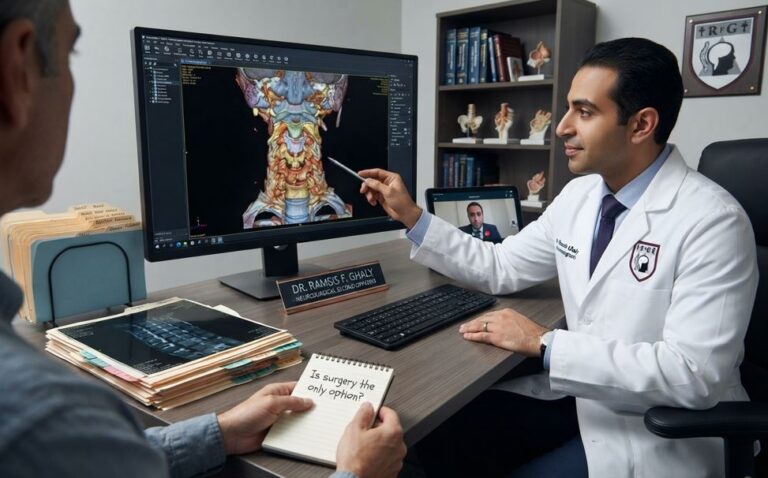
- Get an independent medical review. A neurosurgeon who was not involved in your care can review your imaging and records, tell you whether your recovery looks expected, and outline options. This is often the fastest way to replace uncertainty with clarity.
- Know your reporting options. Concerns can be raised with the hospital’s patient relations office, and in Illinois with the Illinois Department of Financial and Professional Regulation (IDFPR), which licenses physicians. Hospital concerns can also go to the Illinois Department of Public Health or the hospital’s accrediting body.
- Speak with a medical malpractice attorney about deadlines. Time limits apply (see below), and an attorney can tell you whether you have a viable claim.
Getting an Independent Opinion After a Bad Outcome
You do not need to resolve the question of blame to find out what is medically going on. A second set of expert eyes can answer practical questions: Is this recovery within the expected range? Is something still treatable? Do I need further surgery, and who should perform it?
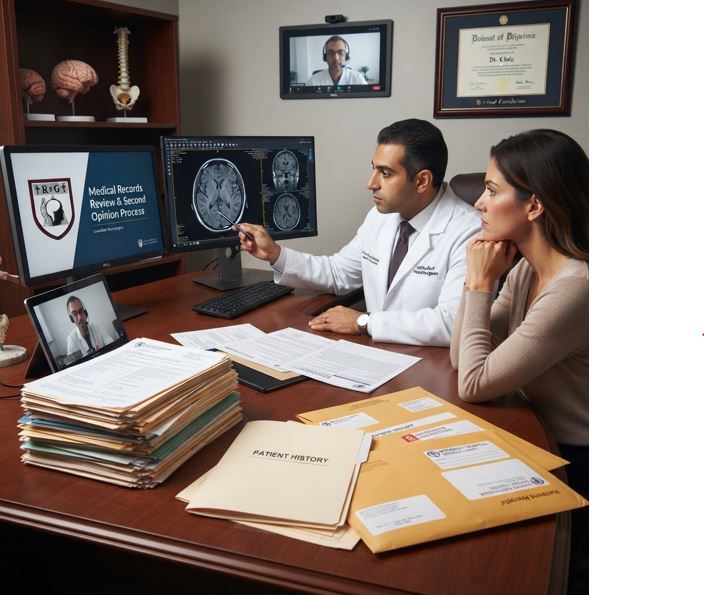
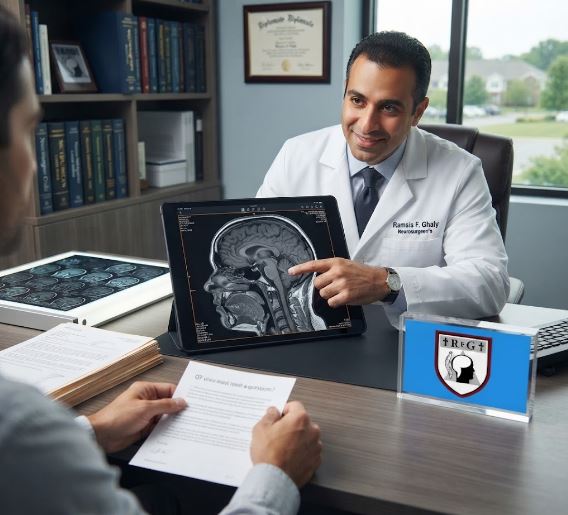
Dr. Ramsis F. Ghaly, a board certified neurosurgeon in Aurora, IL, reviews imaging, records, and prior treatment through a dedicated medical second opinion service and a medical records review, in person or remotely through telehealth. Patients across the country can send their MRI, CT scans, and history for evaluation without traveling first. To see how the process works, read what happens during a medical records review.
Worried about your recovery or a prior surgery? Request an appointment or call 630-978-6143 for an independent review of your imaging and records.
What Happens to the Neurosurgeon?
Consequences depend on the facts and can include internal peer review, changes to hospital privileges, a medical malpractice claim, and, in serious cases, a complaint to the state medical board. Malpractice payments made on a physician’s behalf are generally reported to the National Practitioner Data Bank, a federal database that hospitals and licensing boards consult. A single complication does not end a surgeon’s career, and surgeons are not judged only by whether complications ever occur, but by how they respond and whether the care met the standard.
Your Legal Rights in Illinois: Deadlines Matter
If you suffered harm because of negligent care, you may have a medical malpractice claim. Two points are worth knowing early:
- Filing deadlines. In Illinois, a claim generally must be filed within two years of when you knew or should have known of the injury, and no more than four years after the negligent act, regardless of when you discovered it. Different rules apply to minors. These deadlines can be complicated, so speak with an attorney promptly.
- Expert review is required. Illinois requires a qualified health professional to review the case and support the filing before a malpractice lawsuit can proceed (the “certificate of merit” or affidavit requirement under 735 ILCS 5/2-622).
An independent clinical review of your records can help you understand your medical situation, and an attorney can advise you on the legal side. They are different questions, and you may need both. Dr. Ghaly’s office provides medical evaluation, and this article does not offer legal advice.
How to Lower Your Risk Before Surgery
You cannot eliminate risk, but you can reduce it:
- Ask why surgery is recommended and whether nonsurgical options exist.
- Ask how often your surgeon performs this exact procedure, and what the most common complications are.
- Confirm the plan. Know which side, level, or area is being operated on, and make sure your imaging matches.
- Get a second opinion before major brain or spine surgery. It can confirm the diagnosis, refine the plan, or identify alternatives. Read more in Is Getting a Second Opinion a Good Idea? and Can a Second Opinion Confirm My Diagnosis?
- Bring someone with you to consent discussions and take notes.
Considering brain surgery or spinal surgery? Dr. Ghaly will review your imaging, explain all reasonable options including nonsurgical ones, and give you a clear picture before you decide. Book an appointment.
Recovery After Surgery Complications
Some complications are fully treatable, and many patients go on to recover well. Outcomes depend on the type of problem, how quickly it was addressed, and the underlying condition. For realistic expectations after brain surgery, see Do You Ever Fully Recover From Brain Surgery?
Frequently Asked Questions
What happens if a neurosurgeon makes a mistake during surgery?
The surgical team first works to stabilize the patient and correct the problem if possible. The event is then reviewed internally, the patient should be informed, and corrective treatment is planned. If the error was negligent and caused harm, the patient may have grounds for a malpractice claim.
Is a surgical complication the same as a surgical mistake?
No. Complications such as infection, bleeding, or CSF leaks can occur even with excellent care and are discussed during informed consent. A mistake is care that falls below the accepted standard and could reasonably have been avoided.
What is the most common neurosurgical mistake?
Errors are rare, and no single type dominates. Examples include wrong-site or wrong-level surgery, planning from the wrong imaging, missed post-operative warning signs, and inadequate informed consent.
Can I sue a neurosurgeon for a bad outcome?
A bad outcome alone isn’t enough. You generally need to show the care fell below the standard and caused harm, usually supported by expert review. An attorney can evaluate whether your case qualifies.
How long do I have to file a malpractice claim in Illinois?
Generally two years from when you knew or should have known of the injury, with an outer limit of four years from the negligent act. Minors have different timelines. Consult an attorney promptly.
Who can I report a neurosurgeon to in Illinois?
You can raise concerns with the hospital’s patient relations or risk management office and file a complaint with the Illinois Department of Financial and Professional Regulation (IDFPR), which licenses physicians.
Should I get a second opinion if I think my surgery went wrong?
Yes. An independent neurosurgeon can review your imaging and records, tell you whether your recovery is within the expected range, and discuss treatment options.
Can another neurosurgeon fix a previous surgeon’s mistake?
Sometimes. It depends on the problem, how long ago the surgery was, and your current condition. An evaluation of your imaging is needed to know whether a corrective or revision procedure is appropriate.
What are the warning signs something went wrong after brain or spine surgery?
New or worsening weakness, numbness, severe headache, confusion, fever, wound drainage, trouble speaking, or loss of bladder or bowel control. Seek medical care promptly.
Talk to a Board Certified Neurosurgeon
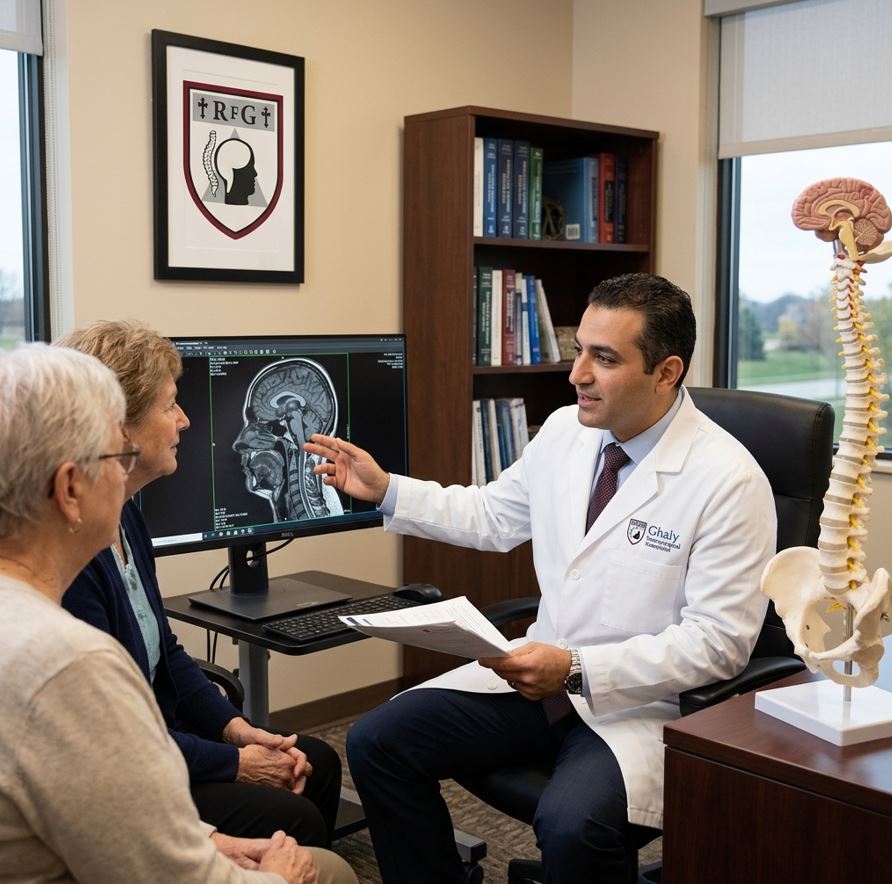
Whether you’re preparing for surgery, recovering and concerned, or trying to understand what happened in a past operation, you don’t have to work it out alone. Dr. Ghaly offers in-person visits at his Aurora, IL office, as well as telehealth consultations and remote records review for patients nationwide.
Request an Appointment | Call 630-978-6143 | Ghaly Neurosurgical Associates, 4260 Westbrook Dr., Suite 127, Aurora, IL 60504 | Mon–Fri 9:00 AM–5:00 PM