
Do You Ever Fully Recover From Brain Surgery? What Recovery Really Looks Like
Many people recover very well after brain surgery and return to work, family life and the activities they love. But “full recovery” is not the same for everyone. It depends on why you needed surgery, where in the brain it was performed, your health beforehand, and any treatment that follows. Some people feel like themselves again in a few months. Others reach a “new normal” with mild lingering effects, such as fatigue or slower concentration. A neurosurgeon who has reviewed your own imaging can tell you what to realistically expect.
If you are facing brain surgery, or you or a loved one are recovering now, this guide explains what the recovery process involves, what usually heals, what can linger, and how to get answers specific to your situation.
Key takeaways
- Recovery is measured in weeks and months, not days. Fatigue is often the last thing to lift.
- “Full recovery” can mean physical healing, symptom relief, cognitive recovery, or return to daily life, and these don’t always happen on the same schedule.
- Your diagnosis and the area of the brain involved are the biggest predictors of your outcome.
- Rehabilitation, rest, follow-up imaging and emotional support all matter.
- If you are still deciding on surgery, a second opinion can help you understand expected outcomes before you commit.
What Does “Fully Recover” Actually Mean?
When people ask whether they will “fully recover,” they usually mean one of four different things:
- Physical healing: the incision, skull and tissues heal. This is the most predictable part of recovery.
- Symptom recovery: the problem that led to surgery, such as seizures, headaches, vision changes or weakness, improves or resolves.
- Cognitive recovery: memory, attention, processing speed and mental stamina return to your baseline.
- Life recovery: you return to work, driving, relationships, exercise and your sense of self.
Many patients heal physically within weeks, regain most daily function within months, and keep improving in subtler ways, like stamina and concentration, for longer. A good question to ask your surgeon is not just “Will I recover?” but “Which parts of recovery are likely for me, and which are uncertain?”
What Affects How Well You Recover From Brain Surgery?
Two people can have a “brain surgery” and have very different recovery journeys. The main factors include:
| Factor | Why it matters |
|---|---|
| Diagnosis | A benign tumor, a ruptured aneurysm, a traumatic brain injury and a Chiari malformation each have different recovery patterns. |
| Location in the brain | Surgery near areas controlling movement, speech, vision or memory carries different risks than surgery elsewhere. |
| Condition before surgery | Existing weakness, seizures or cognitive changes can take longer to improve, or may not fully reverse. |
| Emergency vs. planned surgery | Emergency surgery after bleeding or injury often involves a longer recovery than planned surgery. |
| Surgical approach | Techniques such as microsurgery, endoscopic or image-guided surgery are chosen to fit the condition and anatomy. |
| Additional treatment | Radiation, chemotherapy or ongoing medication can add to fatigue and extend recovery. |
| Age and overall health | General health influences healing and stamina. |
| Rehabilitation and support | Physical, occupational, speech and cognitive therapy can make a real difference. |
Brain Surgery Recovery Timeline: What Most Patients Can Expect
Every case is different, and your surgical team’s instructions always come first. The ranges below reflect what major cancer centers and hospital systems commonly describe.
| Stage | What patients commonly experience |
|---|---|
| Hospital stay | Often a few days to around a week or more, depending on the procedure and how you recover. Monitoring for swelling and complications is the priority. |
| First 1-2 weeks at home | Heavy fatigue, headaches, incision tenderness, swelling or bruising around the face or eyes. Rest, medications and gradual walking. |
| Weeks 3-8 | Energy slowly returns. Many people resume light activity. Fatigue is still common. Follow-up visits and imaging begin. |
| Weeks 6-12 | Many patients return to a more normal routine. A phased return to work is common for desk-based jobs, and driving only when your surgeon clears you. |
| Months 3-12 | Stamina and concentration continue to rebuild. Many people feel they have reached a “new normal.” |
| Beyond one year | Most improvement has occurred, though some patients continue to notice small gains, and some effects may be lasting. |
Fatigue deserves special mention. It is often the most underestimated part of recovery, and it can take several months to fully lift. Pushing through it usually backfires. Pacing, steady sleep routines and gradual increases in activity work better.
What Usually Gets Better After Brain Surgery
For many patients, the following improve over the weeks and months after surgery:
- Incision and bone healing. The skin heals within weeks, while the bone flap continues to heal over months. This is one reason contact sports are restricted for a long time.
- Surgical swelling. Swelling in and around the brain is common after surgery and typically settles over weeks.
- Headaches and bruising. These are usually most noticeable early and ease over time.
- Symptoms related to pressure. When surgery relieves pressure on the brain or nerves, as in some tumors or Chiari malformation, symptoms may improve.
- Energy and stamina. Gradual, though often slower than patients expect.
What Can Linger After Brain Surgery
Honest conversations about recovery include the things that don’t always disappear. Depending on your condition and the area of the brain involved, some patients experience:
- Persistent fatigue. Brain healing takes real energy, and tiredness can outlast the physical recovery.
- Concentration, memory or processing-speed changes. These often improve over months, and rehabilitation can help.
- Mood changes, anxiety or low mood. These are common and treatable.
- Seizures. Some patients need medication, and driving rules may be affected.
- Weakness, balance, vision, speech or hearing changes. These depend heavily on the surgical location and the condition treated, and may improve with therapy.
- Headaches. These can continue for some time, and your care team can help manage them.
Lingering effects do not mean the surgery failed. Sometimes they reflect the original condition rather than the operation itself, and many patients adapt well with therapy and support.
Recovery by Condition
The condition that led to surgery shapes the road ahead. Dr. Ghaly’s brain surgery page outlines the conditions he treats. In general terms:
- Brain tumors: Recovery depends on tumor type and location. Some patients need radiation or chemotherapy afterward, which can add fatigue and lengthen the timeline.
- Brain aneurysm or hemorrhage: The priority is stopping bleeding quickly. Because bleeding can injure the brain before surgery even begins, recovery may involve longer rehabilitation.
- Traumatic brain injury: Recovery can be unpredictable and may involve rehabilitation across physical, cognitive and emotional areas.
- Chiari malformation: Surgery aims to relieve pressure, and many patients see symptoms ease, though recovery varies.
- Craniotomy: This is the surgical approach, not a diagnosis. Recovery depends on the reason it was performed.
Emotional Recovery Is Part of Recovery
Brain surgery is described as a nearly invisible injury. People may look fine to the outside world while feeling anything but. It is common to feel anxious, frustrated, or even grief for the “old normal,” especially if recovery moves slower than expected. These feelings are valid, and they are a medical part of recovery, not a sign of weakness.
If low mood, anxiety or hopelessness persists, tell your care team. Counseling, support groups and, when appropriate, medication can help. If you ever have thoughts of harming yourself, call or text 988 (the Suicide & Crisis Lifeline in the U.S.) or go to your nearest emergency room.
How to Support Your Recovery
Your surgeon’s instructions are your roadmap. In general, these steps help:
- Follow all activity limits. This includes lifting, bending, exercise and driving.
- Attend every follow-up and imaging appointment. These catch problems early.
- Ask about rehabilitation. Physical, occupational, speech and cognitive therapy can speed progress.
- Pace yourself. Alternate activity with rest and keep a regular sleep schedule.
- Take medications as directed. This includes steroids or anti-seizure medicine if prescribed.
- Build back mental activity gradually. Short reading, puzzles or conversation, increased over time.
- Lean on your support system. Family and friends can help with logistics and emotional load.
- Protect the incision. Keep it clean and report any redness, drainage or fever.
When to Get Emergency Help During Recovery
Call 911 or go to the nearest emergency room immediately if you experience:
- A sudden, severe headache that is unlike your usual pattern
- A seizure
- New weakness, numbness, confusion or difficulty speaking
- Fever, or redness or drainage at the incision
- Repeated vomiting or increasing drowsiness
For non-urgent concerns, call your surgical team.
Questions to Ask Your Neurosurgeon About Recovery
Before surgery, a clear conversation about expected outcomes can reduce fear and help you plan. Consider asking:
- What outcome is realistic for my specific diagnosis and tumor or lesion location?
- What are the risks to speech, movement, vision or memory in my case?
- Are there non-surgical alternatives, such as monitoring, medication or radiation?
- How long is the typical hospital stay and recovery in a case like mine?
- Will I need rehabilitation, and what kind?
- When can I expect to drive, fly, work and exercise?
- What would you do if this were your family member?
Not sure you’ve gotten clear answers? Dr. Ghaly offers medical second opinions for patients who want an independent review before deciding on surgery, and medical records review if you would like your MRI, CT and history evaluated before traveling. Not sure which you need? Read Second Opinion vs. Medical Records Review. For more on the process, see How Do I Get a Second Opinion on Surgery? and Is Getting a Second Opinion a Good Idea Before Brain or Spine Surgery?
Get Clarity Before You Decide
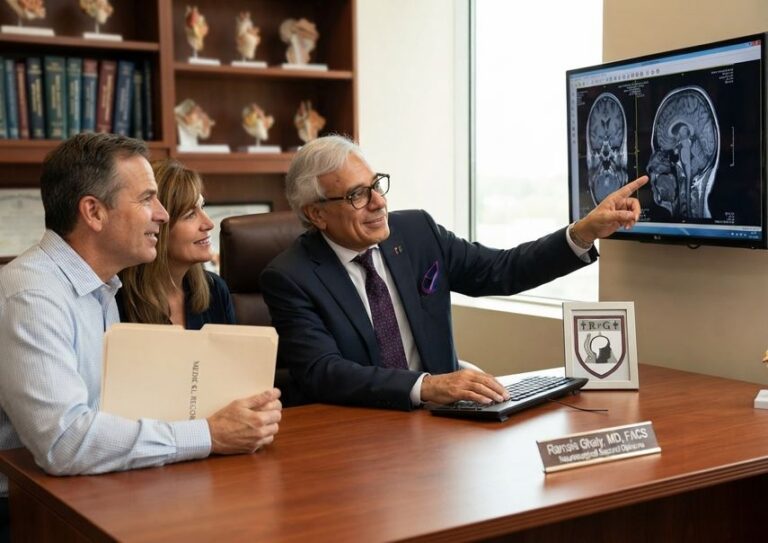
If you’ve been told you need brain surgery, or you’re worried about what recovery will look like, you don’t have to figure it out alone. Dr. Ramsis Ghaly is a board certified neurosurgeon in Aurora, Illinois, who reviews each patient’s imaging and history personally, explains both surgical and non-surgical options, and recommends surgery only when it is the right choice for the patient. Learn more about Dr. Ghaly.
He sees patients in person in Aurora, serving Naperville and the greater Chicago area, and offers telehealth consultations for patients elsewhere.
Ready for answers specific to your case?
- Request an appointment online
- Or call 630-978-6143 (new patients press 0)
- Ghaly Neurosurgical Associates, 4260 Westbrook Dr., Suite 127, Aurora, IL 60504
- Hours: Mon-Fri 9:00 AM-5:00 PM
Frequently Asked Questions
Can you fully recover from brain surgery?
Many people do recover well and return to normal life. But “full recovery” varies by diagnosis, location of the surgery, and overall health. Some patients reach their previous baseline. Others reach a “new normal” with mild lingering effects such as fatigue or slower concentration. Your neurosurgeon can describe the likely outcome in your case.
How long does it take to fully recover from brain surgery?
Hospital stays often last several days to a week or more, and many patients need roughly 6 to 12 weeks before resuming more normal routines. Stamina and concentration can take several months to a year to fully rebuild. Recovery time varies by procedure and individual.
Will I be the same person after brain surgery?
Most patients remain the same person. Some experience temporary changes in mood, energy or thinking during recovery, and these often improve. Persistent personality or behavior changes are uncommon but should be reported to your care team promptly.
How long does fatigue last after brain surgery?
Fatigue is one of the most common effects and often the slowest to improve. It may last for weeks to several months. Pacing yourself, sleeping consistently and increasing activity gradually usually helps.
Can brain surgery cause permanent damage?
Brain surgery carries risks, including the possibility of lasting changes to movement, speech, vision, memory or other functions, depending on the surgical area. Modern techniques aim to reduce these risks, and your surgeon should discuss the specific risks for your case before surgery.
When can I drive after brain surgery?
It depends on your procedure, whether you’ve had seizures, and local regulations. Your surgeon will tell you when it is safe, so do not resume driving until you have been cleared.
When can I fly after brain surgery?
Some guidance suggests flying is often possible roughly six weeks after surgery, but this varies by procedure and recovery. Always check with your surgeon first.
When can I go back to work after brain surgery?
Some people with desk-based jobs return in a matter of weeks, often part-time at first. Physically demanding jobs may take several months. Your surgeon can advise based on your recovery and job.
Is it normal to feel anxious or depressed after brain surgery?
Yes. Emotional changes are common after brain surgery. Tell your care team if low mood or anxiety persists, since effective support is available.
Can I get a second opinion before brain surgery?
Yes. A second opinion can help you understand your diagnosis, alternatives and likely outcomes before you decide. Dr. Ghaly offers second opinions in person or remotely through telehealth.
This article is for general education and is not medical advice. Recovery varies by individual, and it does not replace evaluation by a qualified physician. If you are experiencing a medical emergency, call 911.