
Seeking a Second Opinion Before Brain Surgery: What to Know
A second opinion before brain surgery is an independent review of your diagnosis, imaging, and proposed treatment plan by another neurosurgeon. It can confirm your plan, refine the diagnosis, or show alternatives such as monitoring, radiation, or a different surgical approach. In many non-emergency situations there is time to get one. Your surgeon can tell you how much time is safe in your case.
Being told you may need brain surgery is one of the most overwhelming things a person can hear. Asking for a second opinion is not a vote of no confidence in your doctor. It is how you make sure the decision is right before an operation that cannot be undone.
This guide covers when a second opinion makes sense, what it can and cannot change, what to bring, and which questions to ask. If you would rather talk it through now, you can request a neurosurgical second opinion with Dr. Ramsis Ghaly in Aurora, IL, in person or by secure video.
What Is a Second Opinion Before Brain Surgery?
A second opinion is a review of your case by a different neurosurgeon who is not part of your original treatment team. The surgeon looks at:
- Your symptoms and medical history
- Your MRI, CT, or other imaging (the images themselves, not only the written reports)
- Pathology or biopsy results, if you have them
- The treatment your first doctor has recommended
The goal is a clear, independent answer to three questions:
- Is the diagnosis accurate and complete?
- Is surgery necessary, and is it necessary now?
- Are there other reasonable options, or a different way to do the surgery?
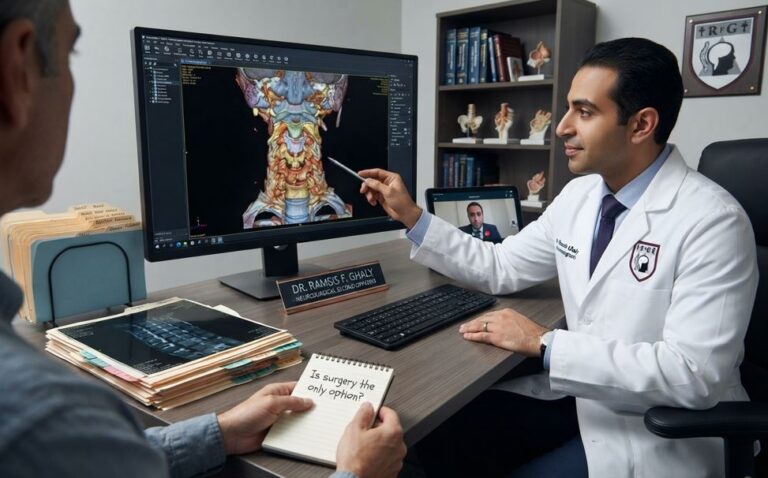
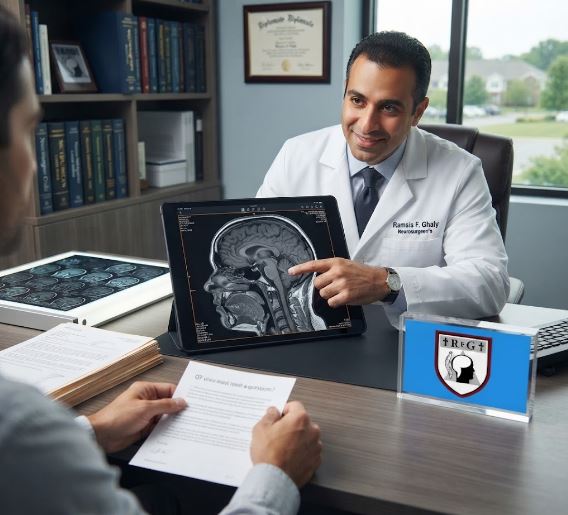
At Ghaly Neurosurgical Associates, Dr. Ghaly’s second opinion service is built around this review. He personally reviews your imaging and history before your consultation, and it is not delegated.
When Should You Get a Second Opinion Before Brain Surgery?
A second opinion is worth considering if any of the following apply:
- You have been told you need brain surgery. Tumor, aneurysm, hemorrhage, Chiari malformation, or another condition. A craniotomy is major surgery, and confirming the plan first is reasonable.
- The diagnosis is unclear. Imaging can be hard to interpret, and different specialists sometimes read the same scan differently.
- You feel rushed or pressured. You should leave a consultation understanding why surgery is recommended and what the alternatives are.
- You want to explore non-surgical options. Observation, medication, radiation, or chemotherapy may be appropriate depending on the condition.
- You were told there are “no options” or the condition is “inoperable.” Another surgeon may assess the case differently, though no one can promise a different answer.
- You want a surgeon with specific experience in your condition or in a particular technique.
- Your insurance directs you to a specific provider, but you want an independent expert’s view.
Do You Have Time? When a Second Opinion Is Safe, and When It Isn’t
Many patients worry that a second opinion will cost them precious time. For many non-emergency brain conditions, a short pause to get an independent review is reasonable. Some neurosurgeons note that even malignant tumors often change little over a week or two, but that depends on the tumor and your symptoms. Your surgeon is the right person to tell you how much time is safe in your case, so ask directly: “Is it safe to wait one to two weeks for a second opinion?”
Some situations are emergencies, and you should not delay:
⚠️ Seek emergency care immediately for the worst headache of your life, sudden weakness or numbness, sudden vision loss, loss of consciousness, a seizure, or significant head trauma. A ruptured aneurysm, an active brain hemorrhage, or rapidly worsening symptoms need urgent treatment, not a scheduling process.
What Can a Second Opinion Change?
People often expect a second opinion to overturn everything. More often it works like this:
| Possible outcome | What it means for you |
|---|---|
| Confirms the plan | You proceed with more confidence and a better understanding of why. |
| Refines the diagnosis | A closer look at imaging or pathology adds detail that shapes treatment, such as tumor type, location, or extent. |
| Suggests more testing | The second surgeon may want an additional scan or sequence before anyone commits to surgery. |
| Changes the timing | Surgery may be urgent, or it may be safe to monitor first. |
| Offers different options | Radiation, chemotherapy, monitoring, or a different surgical approach may be worth considering. |
| Changes the diagnosis | Less common, but possible. This is the main reason independent review matters. |
A second opinion cannot remove all uncertainty. Brain surgery always carries risk, and an honest surgeon will say so. What it can do is make sure the decision rests on the best available information.
If your case involves a tumor, our guide on when brain tumor surgery is necessary explains how neurosurgeons weigh surgery against other approaches.What to Bring to a Brain Surgery Second Opinion
The quality of a second opinion depends on the quality of the information the surgeon receives. Gather:
- Actual imaging, meaning MRI, CT, or angiogram files on disc or via a secure link, not only the radiology report
- Radiology reports for each study
- Pathology and biopsy reports, plus any molecular or genetic testing results, if applicable
- Operative notes and discharge summaries from earlier procedures or hospital stays
- The written treatment recommendation or consultation notes from your current surgeon
- A current medication list, including blood thinners
- A short symptom timeline: what you noticed, when it started, and whether it is getting worse
- Insurance information and a photo ID
Not sure which records matter most? Read what happens during a medical records review, or see whether you need a second opinion or a medical records review.
Questions to Ask the Neurosurgeon
Bring this list to your appointment:
About the diagnosis
- What exactly is my diagnosis, and how confident are you in it?
- Do you agree with the original reading of my imaging?
- Do I need any additional tests before deciding?
About the need for surgery
- Is surgery necessary, and is it necessary now?
- What happens if I wait or monitor the condition?
- What non-surgical options exist, and why are they or aren’t they appropriate for me?
About the operation
- What approach would you use, and why?
- What are the main risks and expected benefits in my case?
- How often do you treat this specific condition?
- What does recovery usually look like? (For realistic expectations, see do you ever fully recover from brain surgery.)
About next steps
- If I choose to go ahead, who would be on my care team?
- What should I do if my symptoms change before surgery?
How to Get a Second Opinion: Step by Step
- Tell your current doctor. Most doctors expect it, and your office can send records. You are not required to ask permission.
- Choose an independent neurosurgeon with experience in your specific condition.
- Request your records and imaging from the hospital or imaging center. Allow time for this.
- Check your insurance. Coverage varies by plan. Original Medicare Part B generally covers a second opinion on medically necessary, non-emergency surgery, with the usual 20% coinsurance. Medicare Advantage and private plans differ, so confirm with your plan.
- Book the consultation, in person or by video.
- Compare the opinions and ask both surgeons to explain any differences. If they disagree, a third opinion is reasonable.
For more detail, see how to get a second opinion on surgery.
Second Opinion With Dr. Ghaly: What to Expect
Dr. Ramsis F. Ghaly is a board certified neurosurgeon in Aurora, IL, who treats brain tumors, aneurysms, hemorrhages, Chiari malformations, and traumatic brain injuries. His approach is to explain every reasonable option, including nonsurgical ones, and to recommend surgery only when it is the right choice for the patient in front of him. Learn more about Dr. Ghaly.
Here is how the process works:
- Reach out by phone or through the online appointment form.
- Send your records and imaging securely.
- Case review. Dr. Ghaly personally reviews your imaging and history before the visit.
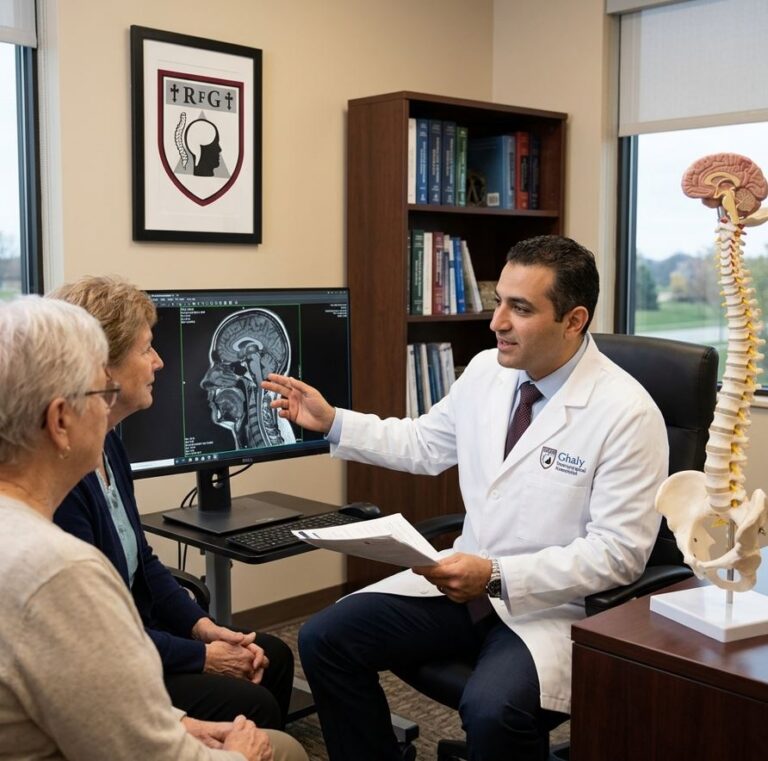
- Consultation. Meet in person at the Aurora office, or by secure video.
- Your recommendation. You receive a clear assessment of your diagnosis and options so you can decide your next step.
In-Person or Virtual?
| In-person | Virtual (telehealth) | |
|---|---|---|
| Where | Aurora, IL office | Anywhere, by secure video |
| Best for | Cases that need a physical exam | Patients who cannot travel, or who want an initial review first |
| Insurance | Typically billed like a standard visit | Generally out-of-pocket, not billed to insurance |
Telehealth is available to patients outside Illinois and outside the country. Dr. Ghaly may recommend an in-person visit if your case needs a physical exam. Learn more about telehealth services.
No referral is required to request a second opinion. Bringing your existing records makes the consultation more thorough.
Ready for clarity before you decide?
Request a Second Opinion Appointment →
Or call 630-978-6143 or 630-578-7500 (press 0 for new patients), Monday to Friday, 9:00 AM to 5:00 PM.
Not Ready for a Full Consultation? Start With a Records Review
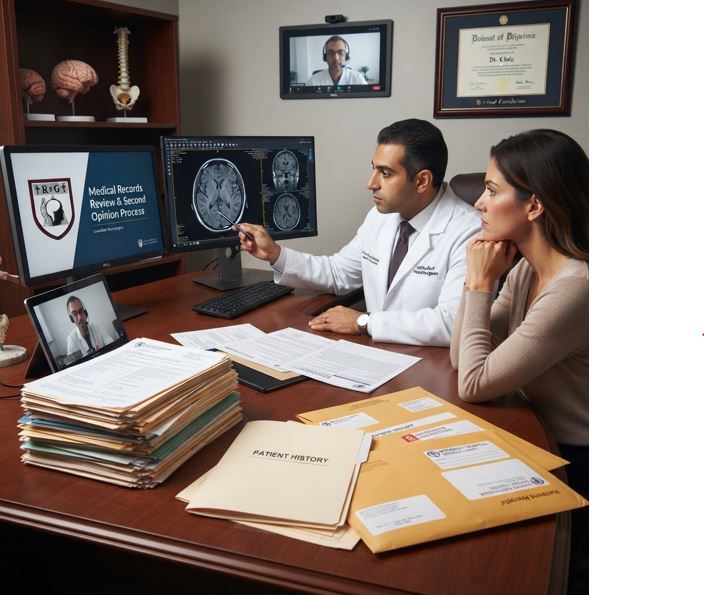
If you want an expert to look at your imaging before committing to a visit, a medical records review lets you send your MRI, CT scans, and clinical history for evaluation without traveling first.
FAQs
Is it normal to get a second opinion before brain surgery?
Yes. Second opinions are a normal part of managing serious conditions, including brain tumors. Many patients seek one to confirm the diagnosis, review imaging, and understand whether surgery is the right next step.
Will a second opinion delay my treatment?
It may add days to a couple of weeks. In many non-emergency cases that is acceptable, but it depends on your condition. Ask your surgeon whether waiting is safe. Do not delay care if you have sudden or severe symptoms.
Will my surgeon be offended?
Experienced surgeons expect second opinions for major surgery. A good surgeon wants you to feel confident in the plan.
What if the two opinions disagree?
Ask each surgeon to explain their reasoning, including what imaging findings and risks they weighed. You can request a third opinion. Original Medicare may cover a third opinion when the first two differ.
Does insurance cover a second opinion before brain surgery?
It depends on your plan. Original Medicare Part B generally covers a second opinion for medically necessary, non-emergency surgery, and related tests. Some Medicare Advantage and private plans require referrals or in-network providers. At our office, in-person second opinions are typically billed like a standard visit, while virtual second opinions are generally out-of-pocket. Call the office to confirm.
Can I get a second opinion online or by video?
Yes. Dr. Ghaly offers virtual second opinions by secure video. He reviews your imaging and records and discusses your case in detail. If your case needs a physical exam, an in-person visit may be recommended.
What if I was told my condition is inoperable?
A second neurosurgeon may evaluate the case differently, but that is never guaranteed. A second opinion can clarify whether other approaches or treatments are worth exploring.
How do I find the right neurosurgeon for a second opinion?
Look for board certification in neurological surgery and experience with your specific condition. Ask how often the surgeon treats it and which techniques they use.
The Bottom Line
You do not have to make this decision under pressure. A second opinion before brain surgery gives you a clearer understanding of your diagnosis, your options, and your risks, whether it confirms your plan or changes it.
Take the next step. Request an appointment with Dr. Ghaly or call 630-978-6143.
Ghaly Neurosurgical Associates, Fox Valley Office Commons, 4260 Westbrook Dr., Suite 127, Aurora, IL 60504.
This article is for general education and is not medical advice. It does not replace an evaluation by a qualified neurosurgeon. If you are experiencing sudden, severe symptoms, seek emergency care immediately.