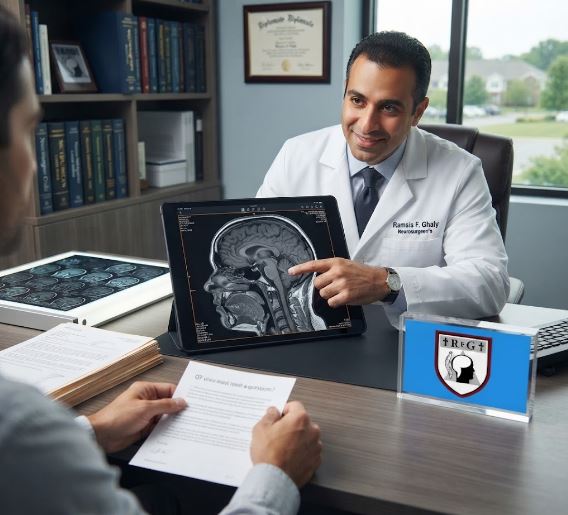
Can a Second Opinion Confirm My Diagnosis?
Yes. A second opinion can confirm your diagnosis. It can also refine it, add detail, or sometimes change it. When a specialist independently reviews your imaging, records and symptoms and reaches the same conclusion, you can move forward with much more confidence. If the conclusion differs, you learn that before making a major decision.
When you hear a serious diagnosis, such as a brain tumor, a spinal condition, or a recommendation for surgery, it is natural to wonder whether it is certain. Asking is not a sign of distrust toward your doctor. It is a reasonable step when the stakes are high.
This guide explains what a second opinion can confirm, what the research suggests, what happens if the two opinions differ, and how to get one. It focuses on brain, spine and nerve conditions, where decisions about surgery can be life-changing.
What Does “Confirm My Diagnosis” Actually Mean?
A second opinion rarely produces a simple yes or no. Patients usually end up in one of four situations:
| Outcome | What it means | What typically happens next |
| Confirmed | The second specialist independently reaches the same diagnosis and agrees with the plan. | You proceed with more confidence. |
| Refined | The diagnosis is broadly right, but details change, such as the exact location, severity, or which structures are involved. | The treatment plan may be adjusted. |
| Different | The second specialist reads the findings differently or reaches another diagnosis. | You compare both views and may seek further evaluation. |
| Needs more information | Something is missing, such as an older scan, a report, or another test. | Additional records or testing are requested before a conclusion. |
Knowing these four outcomes in advance helps you go in with realistic expectations.
What Does the Research Say About Second Opinions?
A Mayo Clinic study published in the Journal of Evaluation in Clinical Practice reviewed the records of 286 patients who were referred to Mayo Clinic for a second opinion. The referring diagnosis was confirmed in about 12 percent of cases, refined or redefined in about 66 percent, and completely changed in about 21 percent.
Please read those numbers in context. These were patients referred to a major referral center, usually because their conditions were complex or unclear. They do not describe the average person who asks for a second opinion. Patient-education resources such as MedlinePlus note that a second opinion is often similar to the first.
What the research does show is that second opinions add value more often than many people expect. They often add detail, and occasionally they change the picture entirely. A confirmed diagnosis is one possible result, and the other outcomes still help you decide.
What Can a Neurosurgeon’s Second Opinion Confirm?
For brain, spine and peripheral nerve conditions, a neurosurgical second opinion can help answer questions such as:
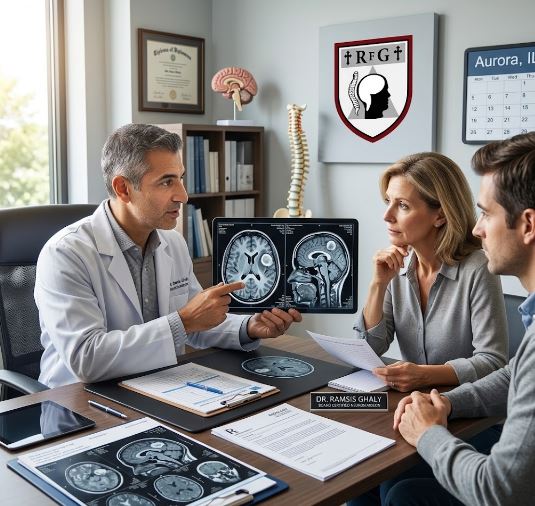
- Do the imaging findings match the diagnosis? A neurosurgeon reviews your MRI or CT scans directly, not only the written report.
- Do your symptoms fit the findings? Disc bulges and degenerative changes are common on spine MRIs, including in people without significant symptoms. The key question is whether what the scan shows explains what you feel.
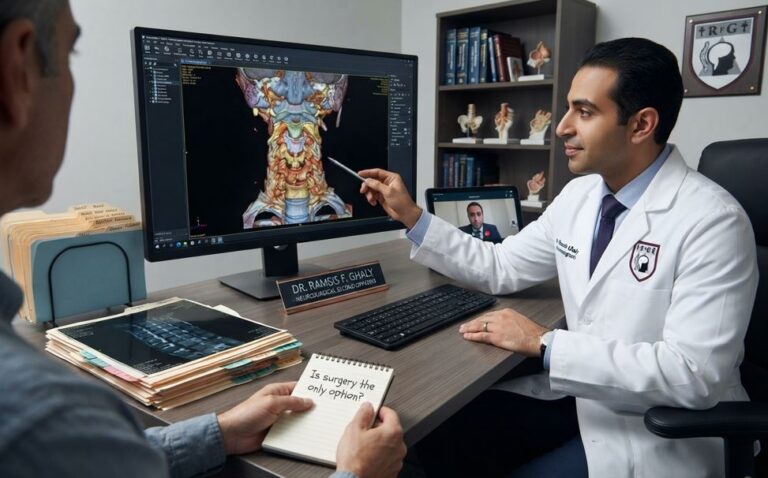
- Is surgery actually necessary? A second opinion can confirm that surgery is appropriate, or show that other options deserve a trial first.
- Is the recommended procedure the right one? Different surgeons may suggest different approaches for the same condition.
- What are the realistic risks, benefits and alternatives?
What a second opinion cannot do alone: it cannot replace a tissue diagnosis. If your diagnosis depends on a biopsy or surgical sample, such as the type of a brain tumor, the question about the tissue itself belongs to a pathologist. A neurosurgical second opinion can still review the reports and tell you whether additional pathology review is worth pursuing.
Signs a Second Opinion May Be Worth It
Consider one if any of these apply:
- You have been told you need brain or spine surgery.
- You feel rushed or pressured to decide.
- Your diagnosis is serious, rare, or hard to explain.
- Your symptoms do not seem to match your imaging.
- You have received conflicting recommendations from different providers.
- You were told you have “no options” or that your condition is inoperable.
- You want to explore nonsurgical options first.
- You are simply not comfortable moving forward.
If you are in this position, Dr. Ghaly’s medical second opinion service is designed for exactly these questions.
When to seek emergency care instead: a second opinion is for planned decisions. Sudden severe weakness, loss of bowel or bladder control, a sudden severe headache, confusion, or trouble speaking need emergency care. Call 911 or go to the nearest emergency room.
What If the Second Opinion Agrees With the First?
Then you have independent confirmation, and that has real value. You can proceed with greater peace of mind, and many patients find they are more engaged and less anxious about the plan. A confirming opinion is a good outcome, not wasted effort.
What If the Second Opinion Is Different?
Disagreement does not mean one doctor is wrong. Specialists can interpret borderline findings differently, and some conditions have more than one reasonable treatment. If the opinions differ:
- Ask each doctor to explain their reasoning. Differences often come down to how the imaging or symptoms were weighed.
- Return to your first doctor with the new information. Many physicians welcome that conversation.
- Check for missing records. A newer scan or a prior report can resolve a disagreement.
- Consider a third opinion if the difference is significant and the decision is major.
- Remember that you do not have to change doctors just because you sought another opinion.
How to Prepare for a Second Opinion
A stronger submission leads to a more useful opinion. Gather:
- Imaging scans themselves (MRI, CT, X-ray) on disc or through a portal, not only the reports
- Radiology and pathology reports
- Notes or summaries from your current physician(s)
- A list of current medications
- Prior treatments, such as physical therapy, injections, or earlier surgery
- Your questions, written down
Useful questions to ask:
- Do you agree with my diagnosis? Do you suspect anything else?
- Do my imaging results explain my symptoms?
- Is surgery necessary now? What happens if I wait?
- What nonsurgical options are reasonable?
- What are the risks and expected recovery for each option?
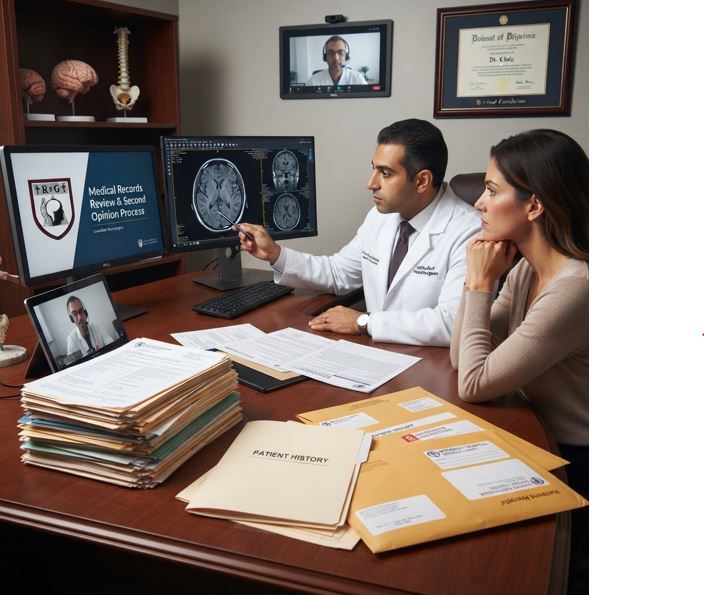
If your records are scattered across several providers, a medical records review can organize them into a timeline, flag anything missing, and give you a neurosurgeon’s perspective before you decide on a visit.
Getting a Neurosurgical Second Opinion With Dr. Ghaly
Dr. Ramsis F. Ghaly is a board certified neurosurgeon at Ghaly Neurosurgical Associates in Aurora, IL. He is a Diplomate of the American Board of Neurological Surgeons and a clinical professor. He treats conditions of the brain, spine and peripheral nerves, including carpal tunnel and ulnar nerve conditions. His practice describes the process as follows:
- Reach out by phone or online.
- Share your records and imaging securely.
- Case review. Dr. Ghaly personally reviews your imaging and history before your consultation.
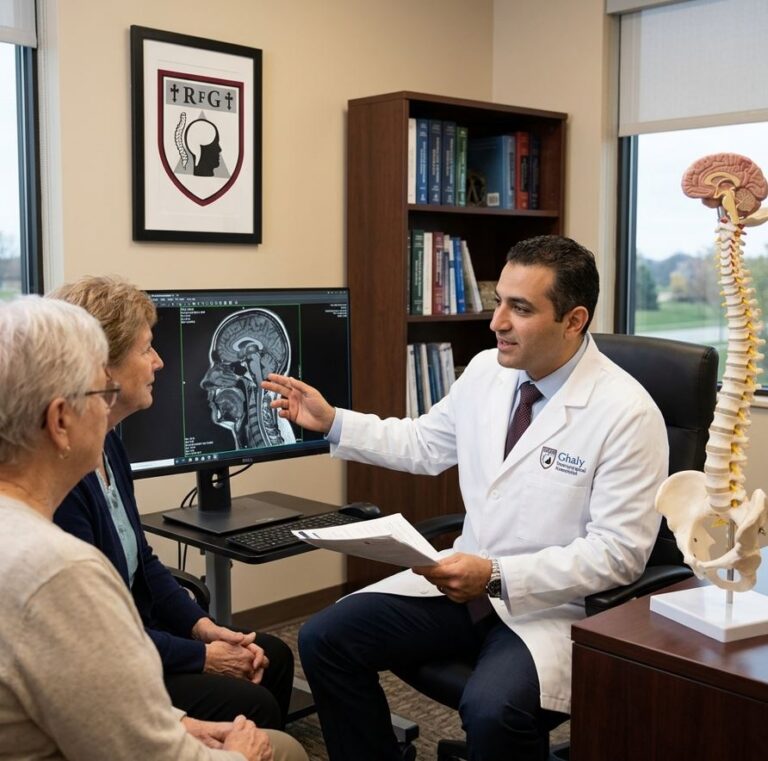
- Consultation in person at the Aurora office or by secure video.
- Your recommendation, a clear assessment of your diagnosis and options.
Your format options
| Option | Best for | Notes |
| In-person second opinion | Patients near Aurora, Naperville or the Chicago area who may need a physical exam | Typically billed through insurance like a standard visit. Please confirm with the office. |
| Virtual second opinion / telehealth | Patients anywhere in the U.S. or abroad | Out-of-pocket and not billed through insurance. |
| Medical records review | Patients with complex histories or multiple providers | Out-of-pocket. |
No referral is required to request a second opinion. Coverage depends on your plan, so contact the office to confirm what applies to you.
Not sure which option fits? Request an appointment online or call 630-978-6143 (new patients: press 0). The office is open Monday to Friday, 9:00 AM to 5:00 PM, and weekend appointments are available by request.
FAQs
Can a second opinion confirm my diagnosis?
Yes. A second specialist who independently reviews your imaging, records and symptoms can confirm the diagnosis, refine it, or reach a different conclusion. Either way, you gain clarity before making a major decision.
How often does a second opinion change the diagnosis?
It depends on the condition and the patients studied. A Mayo Clinic study of 286 patients referred for second opinions found about 12 percent confirmed, 66 percent refined, and 21 percent completely changed. Those patients were referred to a referral center for complex conditions, so the figures do not predict any individual case.
Will my doctor be offended if I ask for a second opinion?
Most doctors are comfortable with it and often help arrange it. Seeking another opinion before a serious decision is standard, and you do not have to switch doctors afterward.
What if the two opinions disagree?
Ask each doctor to explain their reasoning, share the new information with your first doctor, and check whether any records are missing. If the difference is significant, a third opinion can help.
Do I need a referral?
Not for Dr. Ghaly. No referral is required, though bringing your records and imaging makes the consultation more thorough.
Will insurance cover a second opinion?
In-person visits are typically billed like standard visits, and virtual second opinions and medical records reviews are out-of-pocket. Coverage varies by plan, so contact the office to confirm.
Can I get a second opinion online?
Yes. Dr. Ghaly offers virtual second opinions by secure video for patients across the country and internationally. If your case needs a physical examination, an in-person visit may be recommended.
Is a second opinion different from a medical records review?
Yes. A records review gathers, organizes and analyzes your records, imaging and reports. A second opinion is a fresh clinical interpretation built on that information. Many patients start with a review and then schedule a second opinion.
Should I get a second opinion before surgery?
For major brain or spine surgery, it is a reasonable step, especially if you feel unsure, were told you have limited options, or want to explore nonsurgical alternatives.
Take the Next Step With Confidence
A diagnosis should be something you understand and trust. If you want an independent neurosurgical review of your imaging, records and treatment plan, Dr. Ghaly’s office can help you start from wherever you are.
Request an Appointment or call 630-978-6143 or 630-578-7500.
Ghaly Neurosurgical Associates, Fox Valley Office Commons, 4260 Westbrook Dr., Suite 127, Aurora, IL 60504.
This article is for general education and does not replace personal medical advice, diagnosis or treatment. Every case is different. If you are experiencing a medical emergency, call 911.