When Is Spine Surgery Necessary? A Neurosurgeon’s Guide to the Signs, Timing, and Alternatives
Most neck and back pain never needs an operation. But a smaller group of spine problems does, and a few need attention within hours. The real question is which group you are in.
This guide explains when spine surgery is necessary, when it is only one option among several, and when it is not the answer at all. It is written for patients in Aurora, Naperville, and the greater Chicago area, and for anyone nationwide who has been told they may need spine surgery and wants to understand why.
Spine surgery is necessary when a spinal problem is pressing on the spinal cord or nerves and causing serious or worsening neurological symptoms, such as progressive weakness or loss of bladder or bowel control. It may also be recommended when disabling pain from a clearly identified structural cause has not improved with appropriate non-surgical treatment. Most neck and back pain does not need surgery.
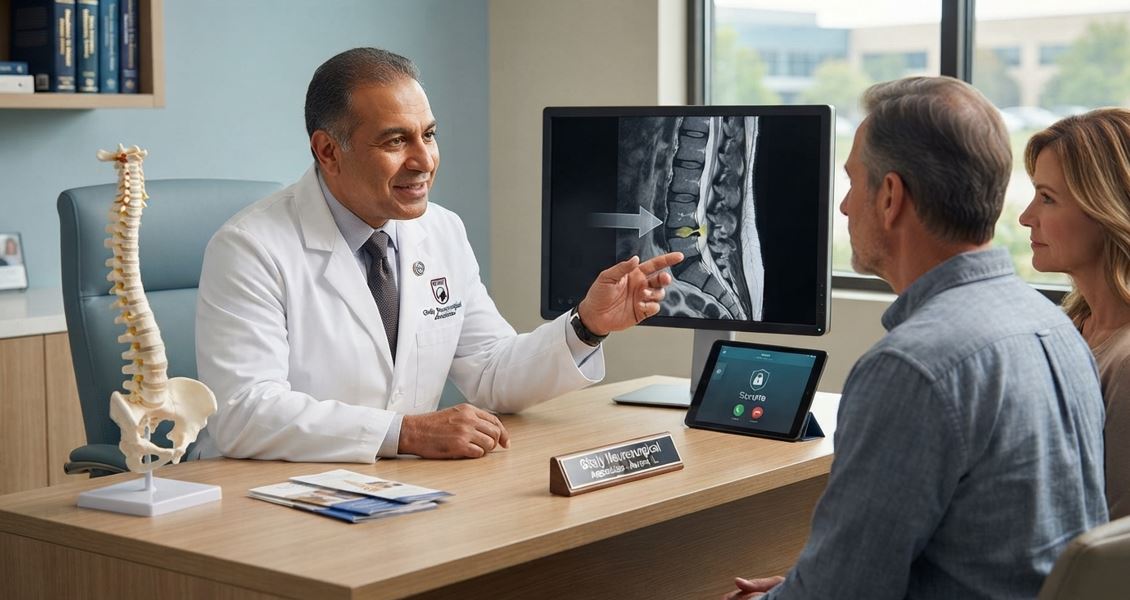
Not sure which category you fall into? Request a spine consultation with board certified neurosurgeon Dr. Ramsis F. Ghaly, in person in Aurora or by secure video.
The Three Situations Where Spine Surgery Comes Up
Not every surgical recommendation carries the same urgency. Most confusion comes from mixing these three situations together.
| Situation | Examples | Typical timeframe |
| Emergency | Loss of bladder or bowel control, saddle numbness, rapidly worsening leg weakness (possible cauda equina syndrome) | Hours. Go to the emergency room. |
| Urgent / progressive | Steadily worsening arm or leg weakness, signs of spinal cord compression in the neck (myelopathy) | Days to weeks. Prompt specialist evaluation. |
| Elective, after non-surgical care | Herniated disc with persistent sciatica, spinal stenosis limiting walking, some cases of spondylolisthesis | Weeks to months of non-surgical treatment first. |
“Elective” does not mean “optional” or “cosmetic.” It means there is time to try other treatments and make a careful decision.
Emergency Red Flags: Go to the ER
Some spine symptoms cannot wait for a routine appointment. Go to an emergency room or call 911 if you have:
- New difficulty urinating, loss of bladder control, or loss of bowel control
- Numbness in the groin, genitals, buttocks, or inner thighs (“saddle” numbness)
- Weakness, numbness, or pain in both legs that is getting worse quickly
- Sudden, severe weakness in an arm or leg
- Severe back pain with fever
- Severe back or neck pain after significant trauma, such as a fall or car accident
- New neurological symptoms in someone with a history of cancer
These signs do not always mean surgery is needed. But they require urgent imaging and evaluation. The most time-sensitive is cauda equina syndrome, in which the nerve roots at the base of the spinal canal are compressed. When it is caused by severe compression, it is treated as a surgical emergency, and acute cases generally need decompression within about 24 to 48 hours of symptom onset. Delay raises the risk of permanent leg weakness and bladder or bowel dysfunction.
Do not wait for a clinic appointment if you have these symptoms. Emergency care comes first. Dr. Ghaly’s office can help with follow-up once the emergency has been evaluated.
Urgent but Not an Emergency: Progressive Symptoms
Some conditions do not produce a dramatic emergency but do get worse over time. These deserve a specialist evaluation soon, not in six months.
Progressive weakness. Weakness is more concerning than pain. Signs include a foot that catches or drags (foot drop), difficulty lifting an arm, or a grip that is fading. If weakness is worsening, surgery becomes more likely to be recommended than it would be for pain alone.
Cervical myelopathy (spinal cord compression in the neck). This happens when age-related changes narrow the spinal canal and squeeze the spinal cord itself. Warning signs include:
- Clumsy hands, dropping things, or trouble with buttons and handwriting
- Numbness or tingling in both hands
- Unsteady walking, poor balance, or new falls
- In advanced cases, bladder changes
Medical guidelines generally recommend surgical evaluation for moderate to severe or worsening myelopathy. Research also links longer symptom duration and more severe cord compression with less improvement after surgery. That is why “wait and see” is not a good plan when these signs are present.
If you are noticing hand numbness, it can also come from the wrist. A neurosurgeon can help sort out whether the source is the neck, the wrist (carpal tunnel syndrome), or another nerve.
When Surgery Becomes Reasonable After Non-Surgical Care
The largest group of patients falls here. Their symptoms are real and often disabling, but they are stable and not neurologically dangerous. Surgery is considered when a specific, visible structural problem matches the symptoms and non-surgical care has not given enough relief.
| Condition | Common symptoms | Usually tried first | Surgery is considered when… | Procedures that may be discussed |
| Herniated disc with nerve compression | Pain radiating into the leg (sciatica) or arm, numbness, tingling, weakness | Activity modification, medication, physical therapy, sometimes injections | Nerve pain persists despite treatment, is severe or disabling, or weakness develops or worsens | Microdiscectomy / lumbar disc surgery |
| Lumbar spinal stenosis | Leg pain, heaviness, or cramping when standing or walking; relief when sitting or leaning forward | Therapy, medication, injections, activity changes | Walking and daily function are seriously limited, or nerve function is declining | Decompression (laminectomy) |
| Cervical stenosis / myelopathy | Neck stiffness, hand clumsiness, balance changes, arm pain or numbness | Monitoring and therapy in mild cases | Moderate to severe or progressive cord compression | Cervical laminectomy and related decompression |
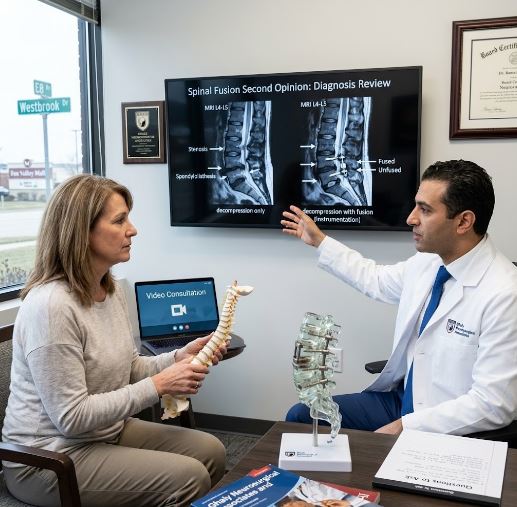
| Spondylolisthesis / instability | Back and leg pain, often worse with standing or activity | Therapy, medication, activity changes | Instability, significant slippage, or nerve compression persists despite care | Decompression with spinal fusion in selected cases |
Every case is individual. Dr. Ghaly’s approach is to match the procedure to your diagnosis, anatomy, symptoms, neurological exam, and imaging, not to a template. You can read more about the procedures he performs on his spine surgery page.
When Spine Surgery Is Usually Not the Answer
Being honest about this builds trust, and it protects patients from operations that will not help.
- Back pain alone, with no nerve symptoms. Surgery tends to relieve leg or arm pain from a pinched nerve better than it relieves pain in the back itself. Many people who have surgery for back pain still have some back pain afterward.
- An alarming MRI report by itself. Bulging or herniated discs and bone spurs show up on scans of many people who have no symptoms at all. Imaging must match your symptoms and exam before it justifies surgery.
- The first weeks of a new flare-up. Most back pain improves on its own within about three months.
- Symptoms that do not line up with the imaging. When the story and the scan disagree, the right next step is more evaluation, not an operation.
A good surgeon will sometimes tell you that you do not need surgery. That is a good outcome, and it is the reason a neurosurgical opinion can be valuable even if you never have an operation.
How Long Should You Try Non-Surgical Treatment First?
There is no single timeline that fits everyone. For nerve-related pain without red flags, patients typically try several weeks to a few months of care, such as physical therapy, medication, activity changes, and sometimes injections, before surgery is seriously considered.
What matters more than the calendar is the direction of your symptoms:
- Improving? That is usually a reason to continue non-surgical care.
- Plateaued and still disabling? Time for a specialist review of your imaging and options.
- Getting worse, especially with weakness? Do not wait out a fixed window. Get evaluated promptly.
Neck vs. Low Back: Why the Location Matters
- Cervical (neck): The spinal cord itself runs through the neck. Compression here can affect the hands, balance, and walking, so progressive symptoms carry more weight.
- Lumbar (low back): In the lower spine the cord has ended and a bundle of nerve roots continues down. Compression usually causes leg pain, numbness, or weakness. Severe compression of that bundle is the cauda equina emergency described above.
This is one reason a hands-on neurological exam matters as much as the MRI.
How a Neurosurgeon Decides Whether You Need Surgery
Surgery is recommended when these pieces fit together:
- Your symptoms and how they are changing. Pain, numbness, weakness, walking, and balance, and whether they are stable, better, or worse.
- Your neurological exam. Strength, reflexes, sensation, and gait.
- Your imaging. MRI, CT, or X-rays that show a specific problem at the level that explains your symptoms.
- Your response to prior treatment. What you have tried, for how long, and what happened.
- Your goals and overall health. What you need to be able to do, and whether you are a good candidate for anesthesia and recovery.
Dr. Ghaly personally reviews your history and imaging with this framework, explains both surgical and non-surgical paths, and recommends surgery only when it is the right choice for the patient in front of him.
Questions to Ask Before Agreeing to Spine Surgery
Bring this list to any surgical consultation:
- What exactly is the diagnosis, and where is it on my MRI?
- Which of my symptoms will surgery improve, and which may not change?
- What non-surgical options remain, and why are they no longer enough?
- What is the goal: relieve leg or arm pain, protect nerve function, or stabilize the spine?
- What are the risks, and what are they for someone with my health and anatomy?
- Is a minimally invasive approach appropriate for my condition?
- What does recovery look like, and when could I return to work and activity?
- What happens if I wait, or if I decide not to have surgery?
If the answers feel rushed or unclear, that is a good moment for a second opinion.
What Happens If You Delay Spine Surgery That Is Needed?
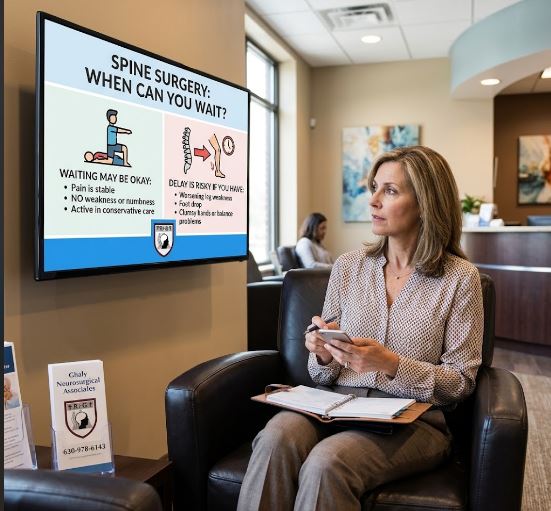
It depends on the condition. If surgery is recommended because a nerve or the spinal cord is being compressed and symptoms are progressing, waiting can allow further damage that is harder to reverse. That is why progressive weakness and cord compression are not “wait and see” situations.
If your condition is stable and your surgeon has recommended elective surgery for quality of life, taking time to continue non-surgical care, get a second opinion, and decide carefully is usually reasonable. The key is ongoing monitoring, so that a change in symptoms is caught early.
Is Minimally Invasive Spine Surgery an Option?
For some conditions, yes. Minimally invasive techniques use smaller incisions and disturb less surrounding tissue, which can mean less blood loss, less postoperative discomfort, and a potentially faster return to normal activity. But they are not right for every diagnosis or every patient. The safest approach depends on your anatomy, the severity of the problem, and your individual factors, which is why a detailed imaging review comes first.
Should You Get a Second Opinion Before Spine Surgery?
A second opinion is not a sign of distrust. It is a reasonable step before any major operation. It is especially worth doing if:
- You have been told you need spinal fusion or another major procedure
- You have been told you have “no options” or that your condition is inoperable
- You feel rushed or pressured to decide
- You have received conflicting recommendations from different providers
- You want to understand non-surgical alternatives before committing
Dr. Ghaly offers three ways to get an independent neurosurgical review:
- In-person neurosurgical second opinion at the Aurora office, including a hands-on exam and direct review of your imaging.
- Telehealth neurosurgery consultation by secure video, for patients elsewhere in Illinois, across the country, or abroad, or for anyone who cannot easily travel.
- Medical records and MRI review, where your records, scans, and prior recommendations are reviewed by Dr. Ghaly himself so you can begin remotely.
Coverage note: In-person second opinions are typically billed through insurance like a standard visit. Virtual second opinions and medical records review are generally out-of-pocket services. Coverage varies by plan, so call the office to confirm before your visit.
Told you need spine surgery and not sure it is right? Request a second opinion appointment or call 630-978-6143 (new patients: press 0).
Spine Consultation with Dr. Ghaly in Aurora, IL
Dr. Ramsis F. Ghaly is a board certified neurosurgeon and clinical professor with more than three decades of experience treating conditions of the brain, spine, and peripheral nerves. He is a Diplomate of the American Board of Neurological Surgeons, with additional credentials in neurocritical care, anesthesiology, and pain medicine. Patients from Aurora, Naperville, the Fox Valley, and the greater Chicago area see him for spine evaluation and treatment.
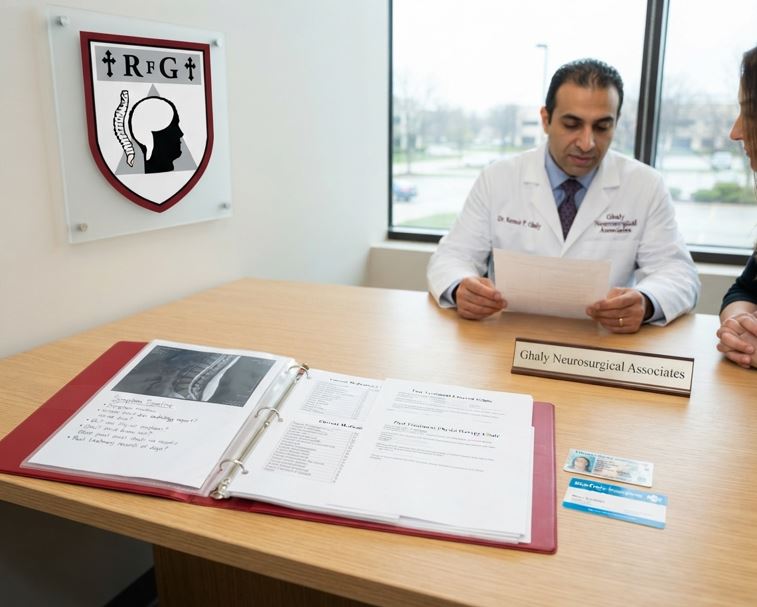
What to bring to your consultation:
- MRI, CT, or X-ray images (the actual scans, not only the reports)
- A list of your current medications
- Notes on your symptoms, what makes them better or worse, and treatments you have tried
- Prior medical records related to your spine condition
What to expect: You request a consultation, submit your imaging and history, Dr. Ghaly reviews your case, and you discuss surgical and non-surgical options before deciding on any next step.
Ghaly Neurosurgical Associates
Fox Valley Office Commons, 4260 Westbrook Dr., Suite 127, Aurora, IL 60504 (near the Fox Valley Mall)
Phone: 630-978-6143 or 630-578-7500
Hours: Monday–Friday, 9:00 AM–5:00 PM; weekend appointments by request
Frequently Asked Questions
When is spine surgery necessary?
Spine surgery is necessary when a spinal condition is compressing the spinal cord or nerves and causing serious or progressive neurological problems, such as worsening weakness or loss of bladder or bowel control. It may also be recommended when disabling pain from a clear structural cause has not responded to appropriate non-surgical treatment.
What are the signs you may need spine surgery?
Warning signs include progressive arm or leg weakness, numbness that is spreading, trouble walking or keeping your balance, clumsy hands, and pain that continues despite non-surgical care. Bladder or bowel changes and saddle numbness are emergencies. A neurosurgeon confirms the need using your exam and imaging.
How do I know if I need back surgery or if it is just back pain?
Back pain alone rarely needs surgery, and most of it improves within about three months. Surgery is more likely to be considered when pain travels into a leg or arm, when weakness or numbness is present, and when imaging shows a specific problem that matches your symptoms.
Is spine surgery ever an emergency?
Yes, but rarely. Cauda equina syndrome and sudden severe neurological loss are surgical emergencies. Go to the ER immediately for loss of bladder or bowel control, saddle numbness, or rapidly worsening weakness in both legs.
How long should I wait before having spine surgery?
There is no universal timeline. Patients without red flags typically try several weeks to a few months of non-surgical care. If symptoms are improving, continuing care makes sense. If weakness is worsening, waiting is not recommended.
Can a herniated disc get better without surgery?
Often, symptoms from a herniated disc improve over time with non-surgical care such as physical therapy, medication, and activity modification. Surgery is usually considered if nerve pain persists and is disabling, or if weakness develops.
Is spinal fusion always needed for spinal stenosis?
No. Stenosis is often treated by decompression, which relieves pressure on the nerves. Fusion is generally reserved for cases involving instability, such as some cases of spondylolisthesis, where the spine needs added stability.
What happens if I do not have the surgery my doctor recommended?
It depends on why it was recommended. If you have progressive nerve or spinal cord compression, delay can lead to permanent damage. If the surgery is elective and your symptoms are stable, you may have time to try other treatments and get a second opinion. Ask your surgeon what the risks of waiting are in your case.
Should I get a second opinion before spine surgery?
Yes. A second opinion can confirm your diagnosis, clarify whether surgery is truly necessary, and outline alternatives. It is especially helpful before fusion or when you have been given conflicting advice.
Can I have a spine consultation online?
Often, yes. Telehealth works well for reviewing symptoms and imaging, follow-up visits, and second opinions. New, acute, or rapidly changing symptoms are usually best evaluated in person. Dr. Ghaly’s office can help you choose the right format.
Do I need a referral to see a neurosurgeon?
Many patients schedule directly without a referral. Contact the office to confirm what applies to your case and insurance plan.
Should I see a neurosurgeon or an orthopedic surgeon for spine problems?
Both neurosurgeons and orthopedic surgeons can perform spine surgery. What matters most is the surgeon’s experience with your specific condition and a willingness to explain all of your options, including non-surgical ones.
Take the Next Step
You do not have to decide about spine surgery alone, or in a hurry. Whether you have been told you need an operation or are simply worried about symptoms that will not go away, an independent neurosurgical review can give you clarity.
Request an appointment online or call 630-978-6143. You can also read patient stories to see how others approached the decision.
This article is for general education and does not replace a medical evaluation or personal medical advice. If you have symptoms of a medical emergency, such as loss of bladder or bowel control, saddle numbness, or rapidly worsening weakness, call 911 or go to the nearest emergency room.