Telehealth vs In-Person Neurosurgeon Consultation: How to Choose the Right Visit
If you’re dealing with back pain, a newly discovered brain finding, or numbness in your hand, one of the first questions is often practical, not medical: should I see a neurosurgeon online, or do I need to go into an office? Both options are legitimate. The right one depends on your symptoms, your imaging, and what stage of care you’re in at first opinion, a follow-up, or something that’s changed suddenly.
This guide breaks down what each visit type actually involves, when a virtual neurosurgeon consultation is appropriate, and when an in-person exam is the safer starting point, so you can book the right visit the first time.
What a Telehealth Neurosurgeon Consultation Actually Involves
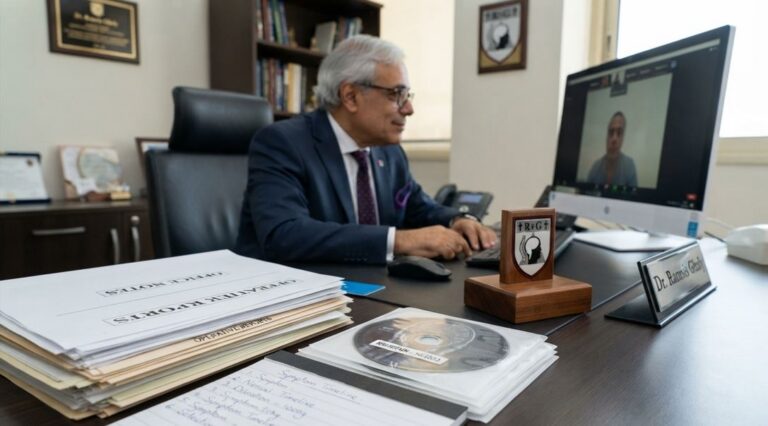
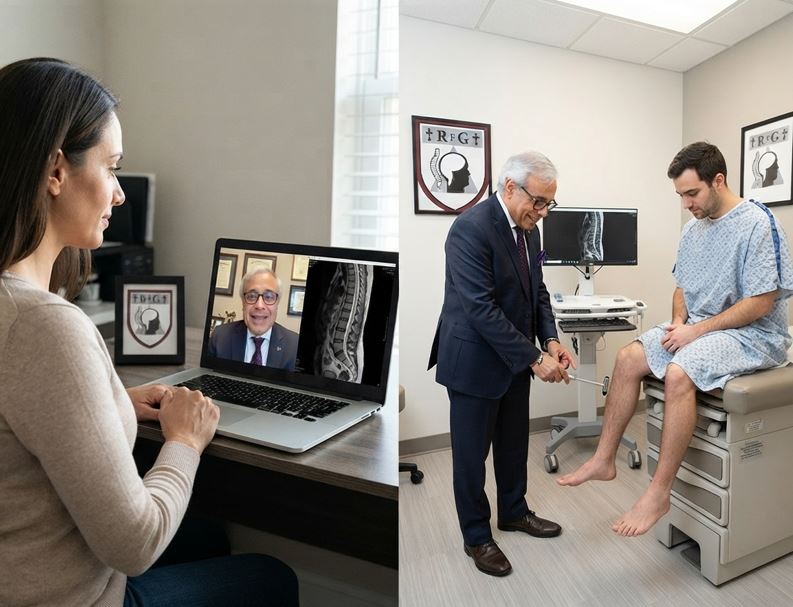
A telehealth, or telemedicine, neurosurgery consultation is a video or phone visit with a neurosurgeon instead of an in-office appointment. Using a computer, tablet, or smartphone, you discuss your symptoms and history, and the neurosurgeon reviews any imaging you’ve already had, such as MRI, CT, or X-ray, that’s been sent ahead of time.
A virtual visit typically includes:
- A detailed discussion of your symptoms, medical history, and how your condition has progressed
- Review of prior imaging and test results you’ve already had done
- An explanation of possible diagnoses and treatment paths, surgical and non-surgical
- Guidance on next steps, whether that’s a treatment plan, additional imaging, or an in-person evaluation
What it does not include is a hands-on physical or neurological exam, so it isn’t a substitute for every type of visit. It’s most useful for follow-ups, second opinions, and initial conversations before deciding whether travel or surgery makes sense.
What an In-Person Neurosurgeon Visit Involves
An in-office visit adds the physical examination component that telehealth can’t replicate. A neurosurgeon can directly test reflexes, strength, sensation, gait, and range of motion, findings that are often essential to pinpointing exactly where a nerve or the spinal cord is affected, and to catching subtle neurological changes that don’t come through clearly on a screen.
In-person visits are generally the better starting point when:
- Your symptoms are new, sudden, or rapidly changing
- A physical or neurological exam is needed to localize the problem
- You haven’t yet had imaging, or your imaging doesn’t fully explain your symptoms
- Surgery is being scheduled and pre-operative evaluation requires direct assessment
Telehealth vs In-Person Neurosurgeon Consultation: Side-by-Side Comparison
| Factor | Telehealth Consultation | In-Person Consultation |
| Physical/neurological exam | Not performed | Performed directly (reflexes, strength, sensation, gait) |
| Imaging & records review | Reviewed remotely if sent ahead of time | Reviewed in the office, same-visit availability |
| Best for | Follow-ups, second opinions, initial discussions, pre/post-op check-ins | New or worsening symptoms, first-time evaluation without prior imaging, pre-surgical workup |
| Travel required | None | Yes, office visit in Aurora, IL |
| Typical technology | Computer, tablet, or smartphone with internet | N/A |
| Insurance | Often billed differently; many virtual second opinions are out-of-pocket | Typically billed as a standard office visit |
| Ideal condition stage | Established diagnosis, stable symptoms, recovery monitoring | New diagnosis, undiagnosed symptoms, acute changes |
When Telehealth Is the Right Choice
A virtual neurosurgery consultation tends to work well for patients who:
- Live outside the Chicagoland area or in a community with limited access to specialized neurosurgical care
- Need a follow-up after a prior visit, procedure, or ongoing treatment plan
- Want an initial opinion before deciding whether an in-person visit or surgery is necessary
- Have mobility limitations, travel restrictions, or a schedule that makes an office visit difficult
- Want a second set of eyes on imaging or a diagnosis without leaving home
- Need to discuss pre-operative preparation or post-operative recovery
By condition, telehealth is commonly used for:
- Brain: discussing tumor findings, aneurysm monitoring, prior imaging, or post-craniotomy recovery
- Spine: herniated discs, spinal stenosis, and post-fusion follow-up as part of spinal surgery planning or recovery, and weighing surgical vs. non-surgical options
- Peripheral nerve: carpal tunnel syndrome and ulnar neuropathy symptom review and next-step planning
When You Need an In-Person Neurosurgeon Visit
Choose an in-office evaluation if your situation involves a new, acute, or rapidly changing symptom. This is generally the safer and more accurate starting point because it allows for a direct physical exam.
Seek emergency care immediately, rather than scheduling a routine consultation of either type, if you experience:
- New loss of bladder or bowel control
- Severe or rapidly progressing weakness
- Sudden, severe headache unlike any before
- Any other sudden neurological change
For non-emergency but new symptoms, such as first-time back or neck pain, new numbness, or an unexplained imaging finding, an in-person visit lets Dr. Ghaly perform a full neurological exam alongside reviewing your imaging, which often leads to a more accurate diagnosis in a single visit.
Can a Neurosurgeon Accurately Diagnose You Over Video?
For many situations, yes. A virtual consultation is highly effective for reviewing your history, discussing imaging you’ve already had, and managing follow-up care. Research on neurosurgery telehealth clinics has found high patient satisfaction, with most patients rating virtual visits comparably to in-person appointments for these purposes, and significant travel time saved, particularly valuable for patients in remote or underserved communities.
That said, accuracy for a new diagnosis often depends on a physical exam, especially for spine conditions where surgical-site evaluation and hands-on neurological testing carry real diagnostic weight. If your case calls for that level of assessment, Dr. Ghaly’s team will recommend an in-person visit rather than making a remote call that isn’t well-supported by exam findings.
Telehealth for Second Opinions, Follow-Up Care, and Pre/Post-Op Check-Ins
Telehealth is particularly well suited to three scenarios:
Second opinions. If you’ve been told you need surgery, or that your condition is “inoperable,” a neurosurgical second opinion can be conducted virtually, letting Dr. Ghaly personally review your imaging and records before you commit to a treatment path. Note that virtual second opinions are typically an out-of-pocket expense, unlike in-person second opinions, which are usually billed like a standard visit.
Post-operative follow-up. Many post-surgical check-ins can be handled remotely, allowing your recovery to be monitored and your care plan adjusted without an office visit.
Pre-operative preparation. Discussing what to expect before surgery, and reviewing final questions, can often be done virtually ahead of an in-person procedure.
If you have prior imaging or records that need professional review as part of this process, a medical records review can be arranged alongside your consultation.
What You’ll Need for a Telehealth Neurosurgeon Visit
- A computer, tablet, or smartphone with internet access, no special software required
- Prior imaging (MRI, CT, or X-ray) and medical records, sent ahead of time when possible
- A quiet, private space for your video or phone visit
If your internet connection is unreliable, a phone consultation is available as an alternative, and federal infrastructure investment continues to expand broadband access for telehealth in remote and rural areas.
How a Telehealth Consultation With Dr. Ghaly Works
- Fill out the contact form on the contact page with your information and reason for the visit.
- Initial phone call from Dr. Ghaly’s office to understand your needs and confirm telehealth is the right fit.
- Schedule your visit in the appropriate format: video, phone, or secure image review.
- Attend your virtual visit from your device.
- Leave with a clear next step, whether that’s a treatment plan, imaging referral, or an in-person evaluation.
Every visit is a direct, one-on-one conversation with Dr. Ghaly himself, a board-certified neurosurgeon with 40+ years of surgical experience across brain, spine, and peripheral nerve conditions, not a delegate or a templated review.
Frequently Asked Questions
Is telehealth as accurate as an in-person neurosurgeon visit?
For reviewing history, imaging, and follow-up care, a virtual consultation is highly effective. New or rapidly changing symptoms are usually best evaluated in person, since some conditions require a hands-on physical exam for the most accurate diagnosis.
Can I get a neurosurgery second opinion online?
Yes. A virtual second opinion lets Dr. Ghaly review your imaging, records, and diagnosis remotely. Keep in mind that virtual second opinions are typically an out-of-pocket expense rather than an insurance-billed visit.
Does insurance cover a telehealth neurosurgeon consultation?
Coverage varies by plan. In-person visits are usually billed like a standard office visit, while telehealth visits, particularly virtual second opinions, are often out-of-pocket. Contact the office to confirm your specific coverage.
When should I choose an in-person visit instead of telehealth?
Choose in-person care for new, sudden, or worsening symptoms, cases where a physical or neurological exam is needed to reach a diagnosis, or when surgery is being scheduled and requires direct pre-operative assessment.
Can a telehealth visit replace my post-surgery follow-up?
Many post-operative follow-ups can be conducted virtually, allowing Dr. Ghaly to monitor your recovery and adjust your care plan. Some situations may still call for an in-person check, depending on your recovery.
What symptoms mean I should skip telehealth and seek emergency care?
New loss of bladder or bowel control, severe or rapidly progressing weakness, or any sudden neurological change are emergencies. Seek immediate in-person emergency care rather than scheduling a routine consultation of any kind.
Does telehealth work for both brain and spine conditions?
Yes, for many stages of care. Brain conditions like tumor monitoring and post-craniotomy follow-up, and spine conditions like disc herniation and post-fusion recovery, are commonly managed by telehealth, though new or complex cases may still need an in-person exam.
You Don’t Have to Guess Which Visit Is Right
If you’re unsure whether your situation calls for a virtual consultation or an in-person exam, Dr. Ghaly’s office can help you decide when you reach out. Schedule your telehealth or in-person consultation, or call 630-978-6143 to discuss your symptoms and find the right fit.